
In June 2007, a 23-year-old guy boarded an Air India Express flight from Chennai to Singapore believing his life was about to begin.
He was not escaping poverty. He was not running from failure. In fact, he was doing reasonably well.
He had a respectable start as a Quality Assurance engineer in India’s automotive industry, a job he secured even before graduating with his mechanical engineering degree. A predictable career path. A stable job where he had gained 2 years of valuable work experience. The kind of life many young men would quietly accept and build upon.
But predictability did not interest him.
He wanted a larger stage.
So, he walked away from that early promising career and flew to Singapore to pursue a postgraduate degree in Industrial and Systems Engineering at the National University of Singapore. In his mind, it was not just another academic qualification. It was a doorway. A chance to build a life founded on an international career where merit, effort, and competence would matter.
For a while, everything looked like it might work.
Then the world changed.
In 2008, the global economy collapsed during the Global Financial Crisis. Hiring slowed. Companies froze recruitment. Singaporeans and PRs became priority job seekers.

By the time he graduated in December 2008, Singapore had already decided it did not need someone like him.
What followed was not failure in the dramatic sense. It was something slower. The slow dismantling of belief.
The Months That Felt Like a Lifetime
In February 2009, after a short break in Chennai, he returned to Singapore, pinning hopes on the annual job fair at the university campus. His folder containing numerous copies of resumes was emptied in the job fair.
He believed persistence would solve everything.
So he searched.
Every day.
He applied online. He scanned job listings in The Straits Times. He emailed lots of recruiters who never replied. He applied for jobs within the university.
Days turned into weeks. Weeks turned into months.
The hardest part was not rejection itself. It was watching others move forward while he stayed frozen. Several of his university mates from India with no prior work experience began landing jobs.
He had two years of experience in the automotive industry before starting his master’s degree.
The realization hit him. It did not matter. His experience had suddenly become invisible in Singapore.
The Slow Disappearance of Pride
For the first nine months in Singapore, he survived on savings from his job in India.
About ₹2 lakhs.
Money, he had once offered his mother when he began earning. She had refused to take it. “Keep it for your expenses later,” she had said.
Neither of them imagined that “expenses” would mean survival.
Rent.
Transport.
Groceries.
Hope.
The money drained quietly. Singapore with its high cost of living was unforgiving.
After completing an industrial attachment at Delphi Automotive Systems in the summer of 2008, which paid him SGD 700 a month, the situation became harder. He was broke.
He began living on an SGD 750 monthly budget coming from money his parents had to transfer from India. He now had to stretch every dollar.
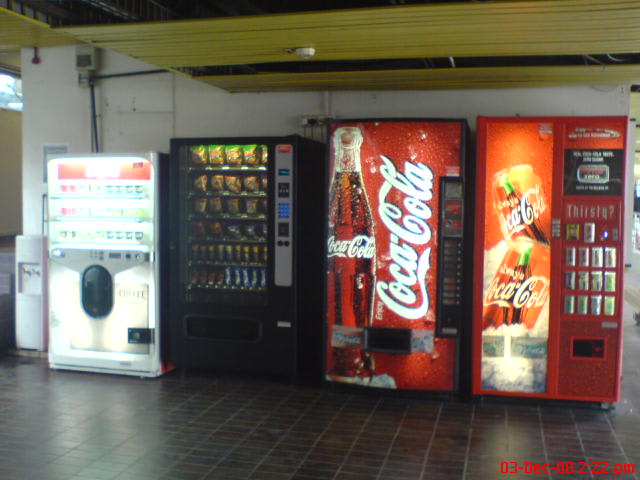
Breakfast became optional, often limited to 80 cent sweet buns. Meals became calculations, he had to hang out at university even after graduation to benefit from the subsidized canteen food for lunch and dinner. Vending machines at the university corridors were his evening saviours.
Bus rides were planned carefully. He walked even more.
Hope became thinner. Eventually, even pride began to feel expensive.
The Night Hunger Won
One evening something inside him gave way.
Hunger had been building for days.
He opened the refrigerator in the shared apartment where he lived with other working professionals. Inside were containers of food. Food that did not belong to him.
He stood there for a moment.
Then he took some. He ate quietly. Yes, he stole food.
Not because he wanted to. Because hunger had overruled pride.
Even years later, that moment would remain one of the most painful memories of his time in Singapore. Not because of the food. But because it was the moment, he understood how far the dream had fallen.
The Job That Appeared and Disappeared
After months of searching and giving several interviews, something finally appeared to have clicked.
A logistics company offered him a job. They found him to be a great fit to work with their operations team based in Chennai.
For a brief moment, the world seemed to return to its proper shape. Relief arrived. Hope returned. For the first time in months, he imagined living in Singapore instead of merely surviving there.
Then the offer was withdrawn.
The reason was bureaucratic and brutally simple. He did not have Permanent Residency. But he could not apply for Permanent Residency without a job offer.
A perfect circle.
He stood outside it.
The Quiet Return
At some point, he stopped believing the situation would change.
Not dramatically. Not all at once. But slowly.
He decided to return to India.
Not because he had succeeded. Not because the dream had worked. But because he did not want to dig deeper into his parents’ hard-earned savings.
He left Singapore in October 2009. He was 25 years old. He came home carrying something far heavier than the luggage he had taken two years earlier.
Shame.
The Dreams That Followed
For years afterwards, Singapore continued to appear in his dreams.
In those dreams he was always back in the 2009 timeline, searching for jobs, living in a small accommodation with others who would wake up in the morning and disappear to their jobs. The food rationing was relived in his dreams.
Walking the same streets. Opening the same job portals. Searching again. Failing again.
Dreams have a cruel way of replaying unfinished chapters.
The Part No One Sees
Life moved forward.
He rebuilt his career slowly. He worked hard. He climbed the corporate ladder. He earned respect. He eventually moved into leadership roles across industries.
He became a husband. He became a father.
From the outside, the story looked normal.
But the young guy from Singapore never completely disappeared. He lived quietly inside the man he had become. Still wondering whether effort alone had ever been enough.
The Irony Time Delivered
Life has a strange sense of irony.
Years after returning to India, the broke young guy who once struggled to survive in Singapore slowly rebuilt his professional life.
Work began taking him to places he had never imagined earlier.
Business trips carried him across China, Germany, Czech Republic, Vietnam, and Thailand. For a brief period, work even placed him in Birmingham in the United Kingdom. The world that once felt closed slowly began opening again.
Then something quietly symbolic happened.
In 2023, many years after the painful chapter had ended, he passed through Singapore twice.
Not as a job seeker. Not as a struggling graduate. But as a transit passenger on his way to South Korea for a regional workshop, representing India in his role as a country manager.
He did not step outside the Changi airport. He simply walked through the same city that had once broken his confidence, made him live through scarcity.
This time, it was just another stop between two flights. No bitterness. No triumph. Just distance.
Time had quietly done what time does best.
It had turned a wound into a memory.
The Truth Time Revealed
For years, he believed Singapore had broken him.
But time has a way of revealing the truth.
Singapore did not break that young man. It revealed him.
It revealed how far he was willing to go for a dream. It revealed how much rejection he could endure. It revealed that even when pride was wounded and hope was fading, he would still wake up the next morning and try again.
Many years later, when he looks back at that young man standing alone in 2009, about to board the return flight to Chennai from Singapore, he feels something he never expected.
Not embarrassment.
Respect.
Because that young man walked into the world alone, took his beating, and still found the strength to come home and rebuild brick by brick.
And that is not failure.
That is the dream that didn’t break him.
But the hardest thing he lost during those Singapore years was not a job opportunity. It was someone.
Author's Note
This story is based on a real chapter from my early career. Writing it many years later was both painful and healing. The 25-year-old who left Singapore deserves compassion and respect from the man he eventually became. This blog is an attempt to give him both.