
Most professionals believe that explaining their decisions thoroughly demonstrates transparency, professionalism, and respect. I believed that too.
For much of my career, I assumed that if people understood my reasoning, they would be more likely to support my decisions. So I explained. Then I explained some more. I walked people through the background, the alternatives considered, the risks evaluated, and the rationale behind every choice.
It felt responsible. What I did not realize at the time was that excessive explanation can sometimes weaken the very message you are trying to deliver.
When Explanation Becomes Justification
There is a subtle but important difference between clarifying a decision and justifying it.
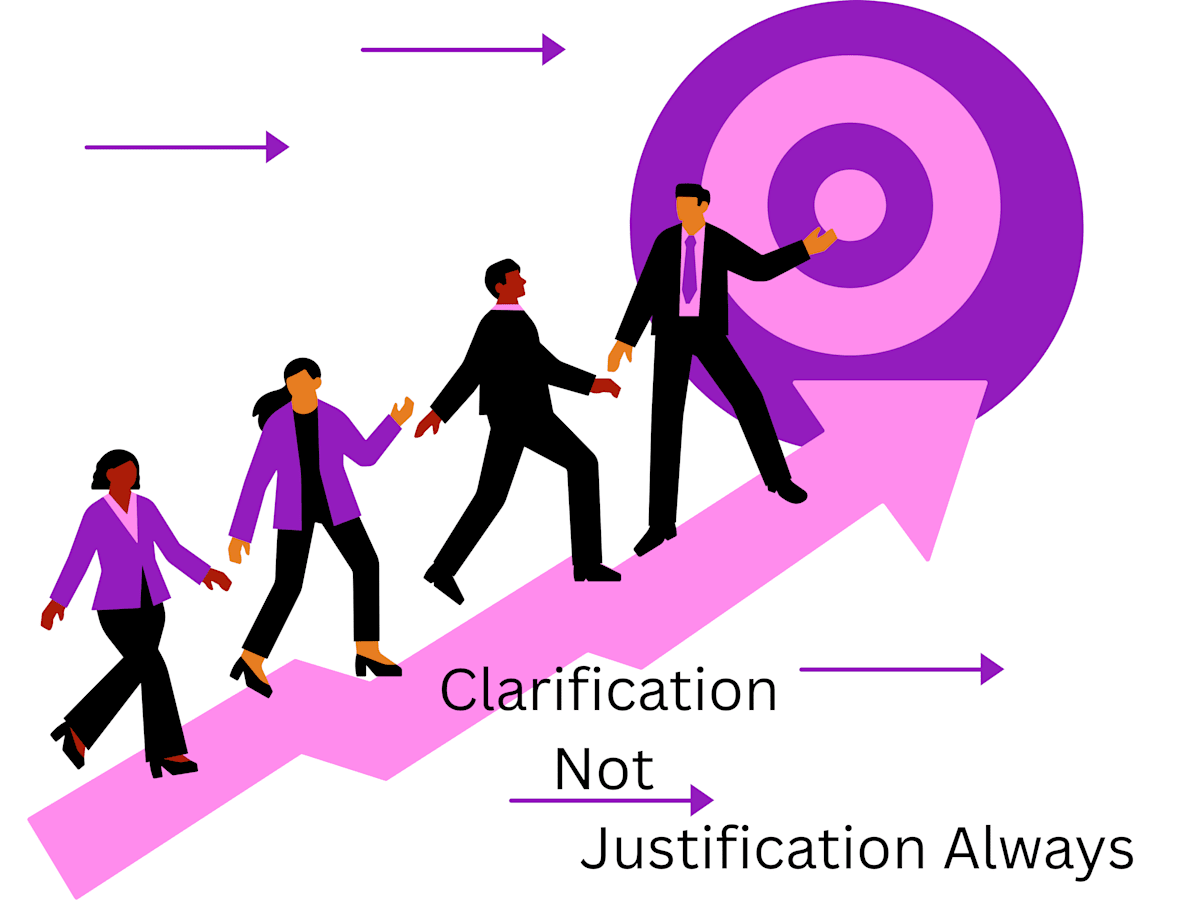
Clarification helps people understand. Justification seeks acceptance.
A leader who says, "We're moving forward with Option B because it best supports our timeline and budget," is providing clarity.
A leader who spends ten minutes explaining why Option A was rejected, why Option C was risky, and why everyone should feel comfortable with the choice may unintentionally be signaling uncertainty.
The more we defend a decision, the more people begin to wonder whether it deserves defending in the first place.
Why We Over-Explain
Most over-explaining does not come from weakness. It comes from good intentions.
We want people to understand our thinking. We want to avoid conflict. We want to appear fair and transparent. We want buy-in. We want to prevent misunderstandings.
Yet beneath these good intentions, there is often another motive. A desire to reduce the discomfort of disagreement. Over-explaining is sometimes a control mechanism dressed up as communication. We cannot control whether someone agrees with us, but we can keep talking. And talking feels like doing something.
There is also a quieter force at play, which is the unspoken question of "who are you to make this call?" . Many of us over-explain not because we doubt the decision, but because we doubt our right to make it. The explanation becomes a way of pre-empting the challenge before it arrives.
What makes this habit stubborn is that it often starts early and stays late. Junior professionals learn to over-explain because they are still earning trust. Senior leaders might keep doing it out of habit, long after the trust is already there. The behavior outlives the reason for it.

When the realization hits that leadership does not eliminate disagreement, it requires the ability to function despite it, leadership starts to appear different.
The Signal We Send
Whether intended or not, over-explaining can communicate several things
- Lack of confidence
- Fear of pushback
- Need for approval
- Uncertainty about authority
Meanwhile, confident leaders often communicate with surprising brevity. Not because they know more. Not because they care less. But because they trust their judgment enough to state a decision without defending every inch of ground behind it.
A Lesson I Learned Over Time
Earlier in my career, I often felt compelled to explain the rationale behind every significant decision. I thought thorough explanations would increase acceptance and reduce resistance.
Sometimes they did. But over time, I noticed something interesting.
The leaders I respected most were not necessarily the ones who explained the most. They were the ones who communicated clearly, provided the necessary context, and then moved forward with conviction.
They did not treat every decision as a debate. They did not seek permission disguised as explanation. They trusted their judgment and allowed their track record to speak for itself.
When More Context Is Necessary
Of course, this is not an argument for leadership to operate in secrecy or arrogance. Some decisions absolutely require detailed communication.
Major organizational changes, strategic shifts, investments, and decisions affecting people's careers deserve thoughtful explanation. Good leaders provide enough context to create understanding. What they mostly avoid is turning every decision into a courtroom defense.

The Shift
Today, I try to follow a simpler approach:
- Lead with the decision
- Explain the key reasons
- Avoid pre-defending against every possible objection
- Accept that not everyone will agree
- Trust the credibility earned through consistent judgment
Ironically, I have found that saying less often creates more confidence, more clarity, and better outcomes. Because people do not follow leaders who explain everything. They follow leaders whose judgment they trust.
Maturity in leadership is not learning how to explain everything. It's learning what no longer needs explaining.