Servant leadership is often described in reassuring language. It is framed as people-first, empathetic, ethical, and humane. In modern leadership discourse, it is positioned as a progressive alternative to rigid, top-down authority.
What is discussed far less is the cost of practicing servant leadership when circumstances are unforgiving.
Servant leadership is not truly tested during growth cycles or periods of financial comfort. It is tested during decline, when balance sheets are weak, public scrutiny is high, and leaders are forced to choose between protecting position and absorbing responsibility.
Haruka Nishimatsu, former CEO of Japan Airlines, offers the world a rare example of what servant leadership looks like under those conditions. Not as an abstract ideal, but as a lived practice.
Nishimatsu-san lived it when it was costly, not fashionable.
Japan Airlines and the Reality of Crisis Leadership
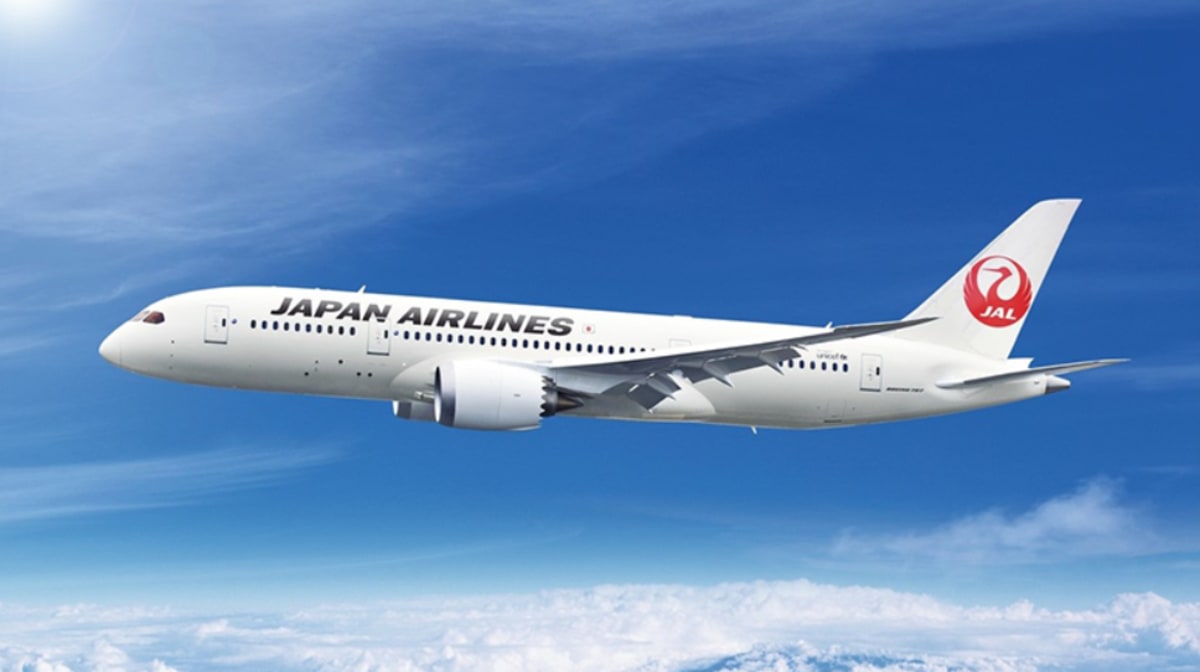
By the time Nishimatsu-san became CEO of Japan Airlines in 2006, the company was already in serious financial trouble. Years of accumulated debt, rising fuel costs, structural inefficiencies, and increasing competition had weakened the airline’s foundation. These challenges were not cosmetic. They were systemic.
The global financial crisis only accelerated pressures that were already present. Despite restructuring attempts and cost-cutting measures, the company’s financial position continued to deteriorate.
In 2010, Japan Airlines filed for bankruptcy protection, marking one of the largest corporate failures in modern Japanese history.
This context matters!
Leadership during crisis must be evaluated within constraints, not fantasies. Ethical leadership does not suspend economic reality, nor does servant leadership guarantee institutional survival.
Haruka Nishimatsu Beyond the Hero Narrative
Nishimatsu-san was not an outsider brought in to perform a dramatic turnaround. He was a career Japan Airlines employee who had spent decades inside the organization. His background in finance and corporate planning gave him an intimate understanding of the airline’s internal mechanics.
He was not known for charisma or public bravado. There was no attempt to build a personal brand or project visionary mystique. He stepped into leadership at a moment when success was uncertain and failure was a real possibility.
What defined his leadership was not personality, but posture. He approached the role with a strong sense of responsibility (責任), not entitlement.
What Servant Leadership Looked Like When It Hurt
Nishimatsu-san's leadership choices became widely noted because they carried genuine personal cost.
He significantly reduced his own compensation, bringing his salary below that of many frontline employees. He eliminated executive privileges that typically separate senior leadership from the workforce. He commuted by public transportation, ate in the company cafeteria, and removed symbolic barriers that reinforced hierarchy.
More importantly, he consistently articulated a simple belief. Management exists to serve the front line, not the other way around. This aligns closely with the core idea of servant leadership (奉仕型リーダーシップ), though Nishimatsu-san rarely framed it in academic terms.
These were not symbolic gestures designed for publicity. They were daily, visible choices that reshaped how leadership responsibility was experienced within the organization.
This is where the heart of his example lies. Nishimatsu-san lived servant leadership when it was costly, not fashionable.
- Costly financially, through personal income and benefits.
- Costly socially, through the erosion of executive distance and status.
- Costly psychologically, through bearing responsibility without assurance of success.
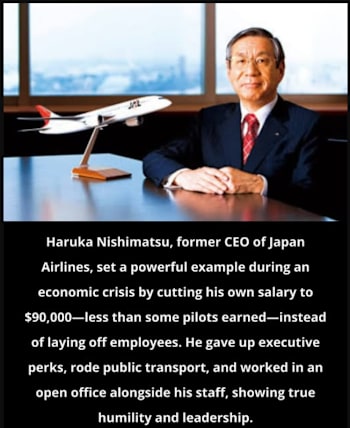
These actions did not reverse Japan Airlines’ financial trajectory. But they fundamentally altered the moral equation of leadership during crisis.
Servant Leadership and the Limits of Outcome-Based Judgement
There is a persistent tendency in leadership writing to equate ethical leadership with positive outcomes. Nishimatsu’s story resists that simplification.
Japan Airlines still went bankrupt. Routes were eliminated. Jobs were lost. The company required state-backed restructuring to survive. Servant leadership did not prevent these outcomes, and presenting it as having done so would be intellectually dishonest.
Yet this does not weaken the case for servant leadership. It clarifies it.

Leadership integrity cannot be evaluated solely by outcomes when many forces lie beyond a leader’s control. Market conditions, historical debt, and structural constraints can overwhelm even the most principled leadership approach.
Failure of an organization does not automatically imply failure of leadership character.
Why Nishimatsu-san’s Leadership Credibility Endured
What distinguishes Nishimatsu-san's legacy is not that Japan Airlines collapsed during his tenure, but that his leadership credibility endured beyond that collapse.
Among employees and observers, his reputation remained intact. There was no widespread perception that leadership had insulated itself from sacrifice or shifted burden downward. Trust (信頼), once lost, is difficult to rebuild. Nishimatsu-san preserved it even as the organization unraveled.
This distinction is critical in discussions of ethical leadership and CEO responsibility. Companies can fail. Financial structures can be dismantled and rebuilt. But moral credibility, once compromised, is far harder to recover.
Nishimatsu-san left behind something quieter but more durable than a turnaround story. He left evidence that responsibility had been carried honestly and it will stand the test of time.
What His Example Teaches Us Without Instruction
Nishimatsu-san’s leadership does not suggest that servant leadership is easy, universally applicable, or strategically sufficient on its own. It suggests something more grounded.
Servant leadership demands a willingness to absorb pain before distributing it. It requires leaders to relinquish privilege, accept vulnerability, and operate without guarantees. It prioritizes responsibility over protection.
This is why servant leadership remains rare, especially during financial distress. Not because leaders lack values, but because the personal cost is immediate while the benefits are uncertain and often invisible.
Nishimatsu-san did not lead softly. He led without armor. Respect!
Leadership When Applause Is Uncertain
It is easy to celebrate servant leadership when it aligns with success stories. It is harder to practice it when financial realities are deteriorating and outcomes are unclear.
Haruka Nishimatsu’s leadership invites a honest conversation. Not about what leadership should look like in theory, but about what it demands in practice.
He did not prove that servant leadership saves companies. He proved what it costs to practice it with integrity. That distinction is worth preserving, especially in an era where leadership language outpaces leadership behavior.